Choosing heat-rejection film for your home
San Diego's sun angle and year-round mild temperatures mean residential heat gain is a real comfort and energy cost problem, not just a summer issue. Picking the right heat-rejection film for your specific window orientation saves money and avoids buyer's remorse.
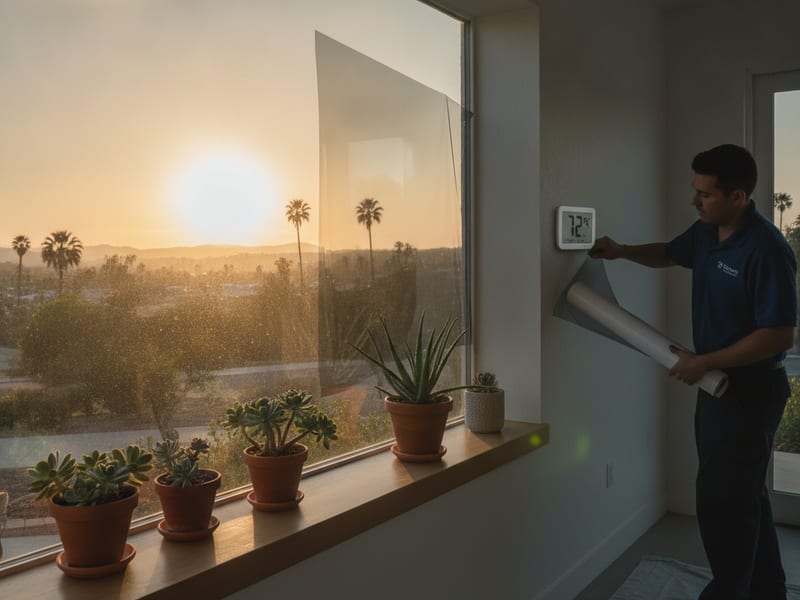
What you'll learn
- What TSER and VLT ratings actually mean and which one predicts cooling performance
- How window orientation changes which film spec matters most
- Why clear UV film differs from heat-rejection film and which one you actually need
- How to get accurate quotes by measuring your windows before calling an installer
Step by step
- Identify your problem windows by orientation West-facing windows get the most intense afternoon heat in San Diego because the sun is low in the sky and shining directly into the glass from roughly 2 PM to sunset. South-facing windows get more consistent full-day exposure. East-facing windows are primarily a morning problem. Map your windows before calling an installer so you can describe exactly where the heat and glare are worst.
- Read the TSER rating, not just the VLT TSER stands for Total Solar Energy Rejected and measures what percentage of total solar energy the film keeps out. A film with 60% TSER blocks 60% of the solar energy hitting the glass. VLT tells you how dark the film looks, not how much heat it rejects. Two films with identical VLT can have very different TSER ratings depending on film technology. Request TSER numbers when comparing film options.
- Match the film darkness to your daylight needs A 15% VLT film blocks more light than a 50% VLT film and looks noticeably darker from the street. On a bedroom or bathroom window facing west, a darker film may be ideal. On a living room picture window facing south where natural light is part of what you like about the room, a lighter film (35-50% VLT) with a high TSER ceramic construction may give you most of the heat reduction without making the room dim.
- Check your windows for low-e glass before ordering Many homes built after 2000 have dual-pane low-e glass, which already rejects some solar heat. Adding certain solar control films to low-e glass can cause heat to build up between the panes and break the seal over time. Ask your installer to verify whether your windows are low-e before selecting a film. Most manufacturers have approved film lists for low-e applications.
- Get square footage measurements before calling for quotes Installers quote by the square foot. Measure each window's width and height in inches, multiply to get square inches, then divide by 144 to convert to square feet. Add 10% for cuts and waste. Having accurate measurements speeds up the quote process and lets you compare bids fairly, since installers quoting the same square footage will be pricing the same job.
Ask installers for a reference job in your neighborhood you can visit and view through the glass from inside. Seeing how a film actually looks on a comparable window is far more useful than a sample card.
Rather have a pro handle it?
We match you with vetted, insured window-film installers across San Diego County. A real person picks up.
Keep learning.
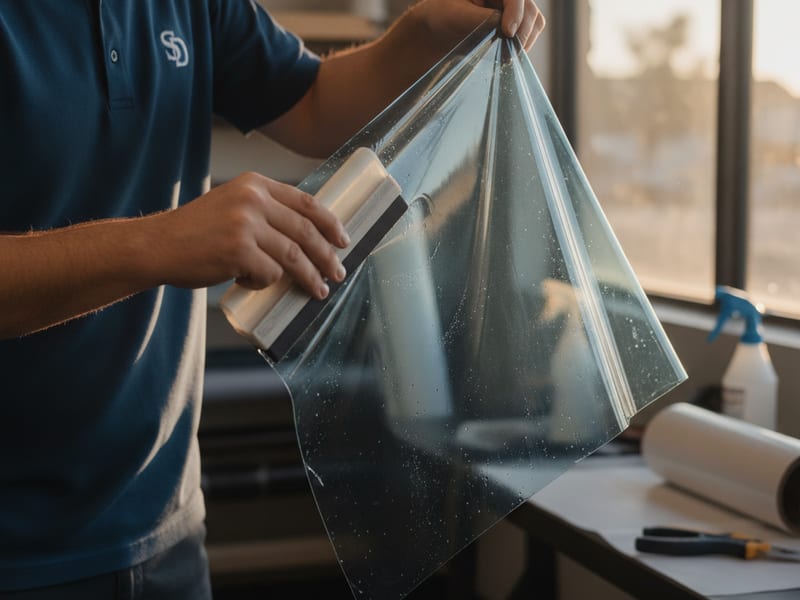
Ceramic vs dyed window film: how to choose
Ceramic and dyed window films look similar on the shelf but perform very differently in San Diego sun. Knowing the difference before you buy saves you from paying for more film than you need or choosing one that fades within a few years.
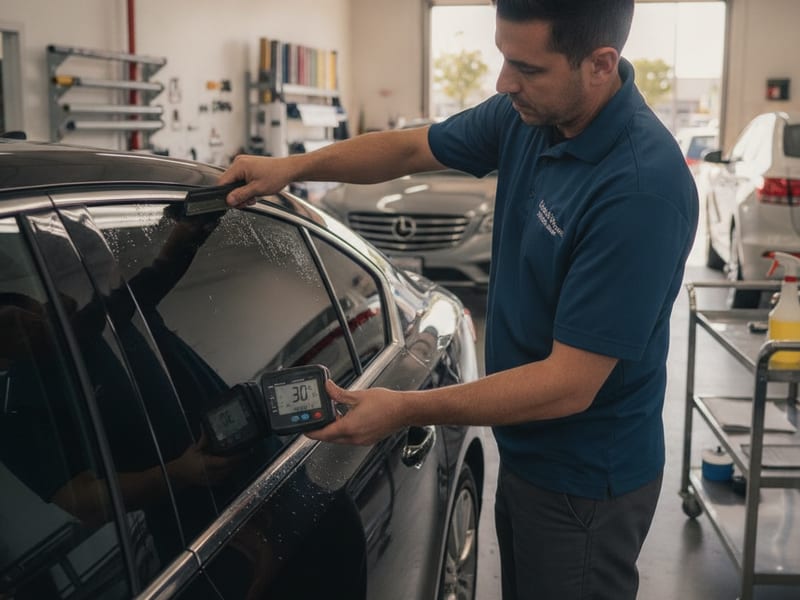
California auto tint law: legal VLT by window
California sets different legal VLT limits for each window position on a car. Getting the wrong shade on the wrong window can result in a fix-it ticket. Here is what the law actually requires so you can verify your installer is quoting within legal limits.
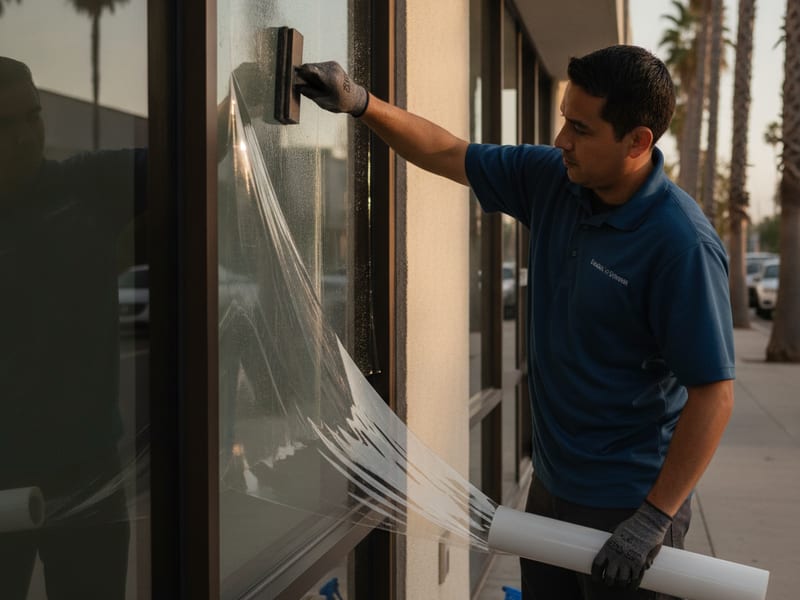
Security and safety window film
Security window film does not make glass shatterproof, but it does hold broken glass in place, slow forced entry, and reduce injury risk from accidental impacts. Understanding what it actually does helps you decide whether it fits your situation.