Ceramic vs dyed window film: how to choose
Ceramic and dyed window films look similar on the shelf but perform very differently in San Diego sun. Knowing the difference before you buy saves you from paying for more film than you need or choosing one that fades within a few years.
What you'll learn
- Why ceramic film rejects heat without blocking phone signals
- How dyed film fades over time and what that looks like on your glass
- Which film type holds up better on west-facing windows in San Diego
- When the price gap between ceramic and dyed film is worth paying
Step by step
- Understand how each film blocks heat Dyed film absorbs solar energy and converts it to heat at the glass surface. That absorbed heat re-radiates into the room, which limits how much cooling you actually get. Ceramic film uses nano-ceramic particles to reflect infrared radiation before it enters the glass, so the glass stays cooler and less heat reaches the interior. In San Diego west-facing rooms, the difference in afternoon comfort is noticeable.
- Check the fade resistance difference Dye-based films break down under sustained UV exposure. Most begin to show a purple or brown tint within three to five years, especially on automotive glass that sits in direct sun daily. Ceramic films carry no dye to break down, so color stability over a decade is common. If you are tinting a car you plan to keep long-term, or a home window that cannot be re-tinted easily, fade resistance matters.
- Factor in signal interference Older metalized films, and some hybrid films, contain metal layers that can interfere with GPS, cell signals, and satellite radio. Ceramic films use no metal, so phone and navigation performance is unchanged after installation. This is primarily relevant for automotive tint, but also worth considering on home windows near Wi-Fi access points.
- Compare visible light transmission options Both film types come in a range of VLT percentages from roughly 5% (very dark) to 70% (nearly clear). The VLT number tells you how much visible light passes through, not how much heat the film rejects. A 35% ceramic film can reject significantly more heat than a 35% dyed film. Compare total solar energy rejected (TSER) numbers when evaluating products side by side.
- Match the film type to your priority If your main goal is UV protection and appearance without a big cost jump, dyed or hybrid film works. If your goal is long-term heat rejection, color stability, and no signal interference, ceramic is worth the higher upfront cost. For San Diego residential west-facing windows and any vehicle you keep longer than five years, ceramic is the recommendation installers here give most often.
Ask the installer for the TSER rating on any film they quote. A higher TSER means more total solar energy rejected, which is the number that actually predicts indoor comfort.
Rather have a pro handle it?
We match you with vetted, insured window-film installers across San Diego County. A real person picks up.
Keep learning.
California auto tint law: legal VLT by window
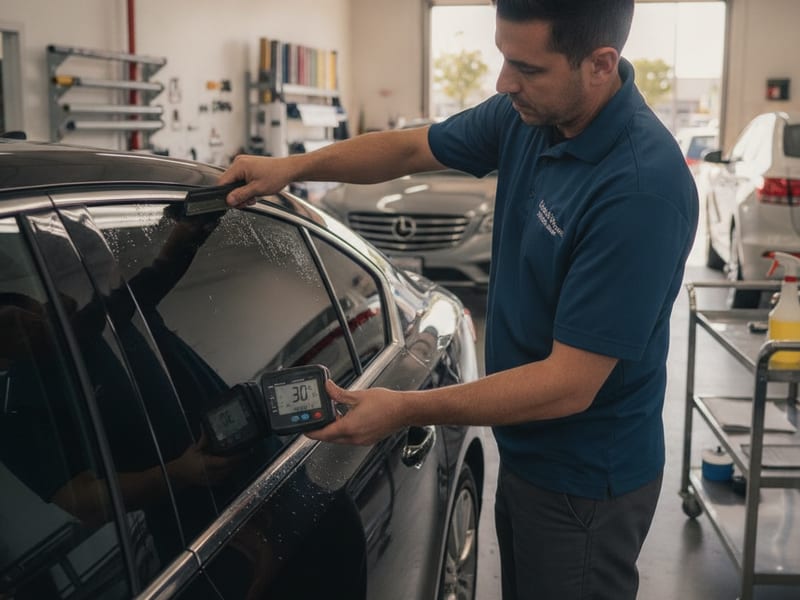
California sets different legal VLT limits for each window position on a car. Getting the wrong shade on the wrong window can result in a fix-it ticket. Here is what the law actually requires so you can verify your installer is quoting within legal limits.
Choosing heat-rejection film for your home
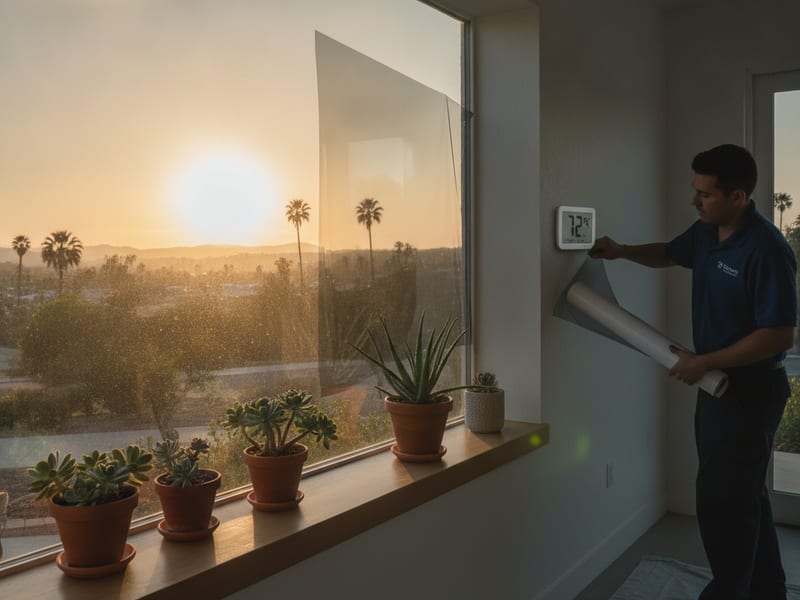
San Diego's sun angle and year-round mild temperatures mean residential heat gain is a real comfort and energy cost problem, not just a summer issue. Picking the right heat-rejection film for your specific window orientation saves money and avoids buyer's remorse.
Security and safety window film
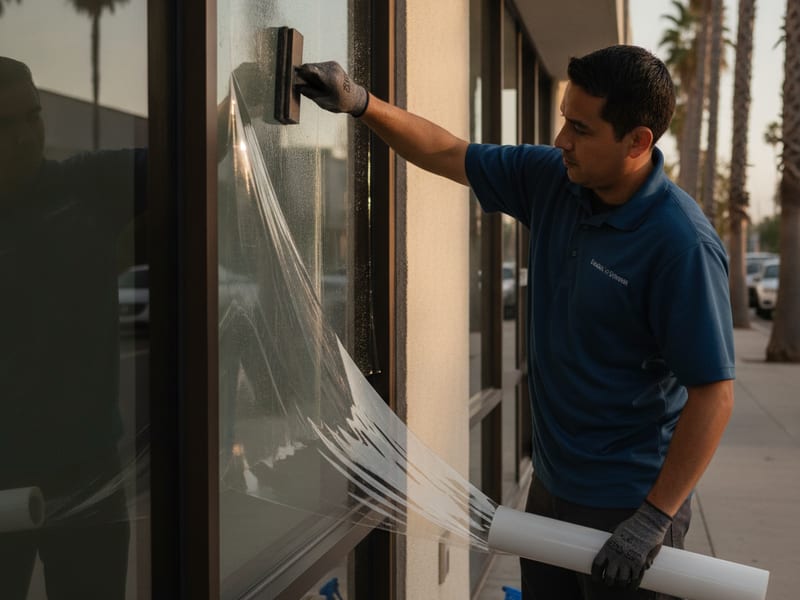
Security window film does not make glass shatterproof, but it does hold broken glass in place, slow forced entry, and reduce injury risk from accidental impacts. Understanding what it actually does helps you decide whether it fits your situation.