California auto tint law: legal VLT by window
California sets different legal VLT limits for each window position on a car. Getting the wrong shade on the wrong window can result in a fix-it ticket. Here is what the law actually requires so you can verify your installer is quoting within legal limits.
What you'll learn
- The legal VLT percentage for each window position under California Vehicle Code Section 26708
- Why factory glass tint affects your installed film VLT measurement
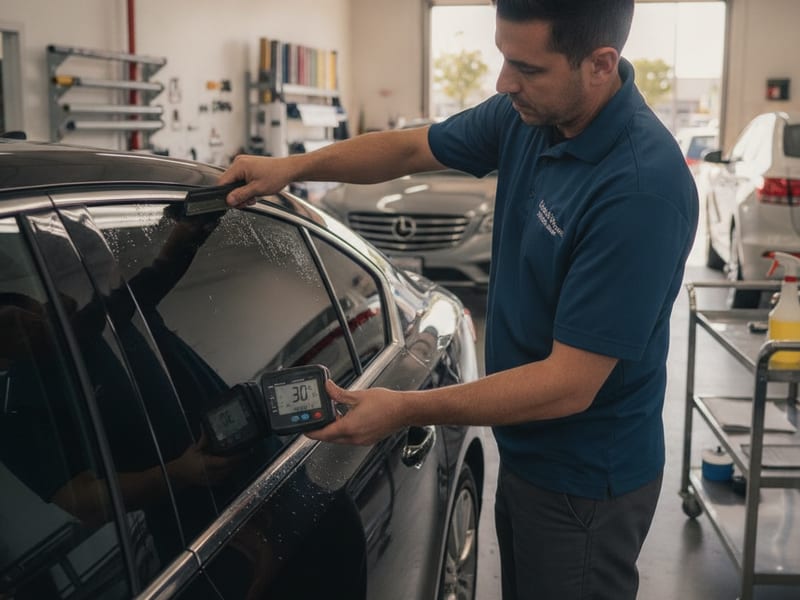
- What happens during a tint inspection and how a VLT meter is used
- Which medical exemptions exist and how to get the correct documentation
Step by step
- Know the VLT rule by window position California Vehicle Code Section 26708 sets the rules. Front side windows (driver and passenger) must allow more than 70% of light through. Rear side windows and the rear window have no VLT minimum if you have both outside mirrors. The windshield can only have tint in the top 4 inches and must be non-reflective. These are the numbers your installer works with.
- Account for factory glass tint Most modern vehicles have factory privacy glass on rear windows that already blocks a portion of light. VLT is measured as the combined transmission of the glass plus any added film. A rear window with 20% factory tint plus a 20% added film reads as approximately 4% combined, which is legal on rear windows. A front window with 80% factory glass plus a 35% film reads as approximately 28%, which is legal. Your installer should know your specific vehicle glass specs.
- Understand reflectivity limits California also limits how reflective your tint can be. Front and rear side windows cannot be more reflective than standard glass. Highly mirrored or chrome-finish films that are popular for privacy may not meet this standard on side windows. Confirm that any privacy film your installer quotes for side windows falls within the non-excessive-reflectivity requirement.
- Check the medical exemption process California allows a darker front-window tint if a licensed physician certifies a medical condition (such as lupus, photosensitivity, or certain skin conditions) that requires reduced sun exposure. The process requires a signed certification from the physician that you carry in the vehicle. The certification does not exempt you from roadside measurement, but it does provide legal cover if the film tests darker than 70% on front windows.
- Verify your installer offers a VLT meter reading before you leave A reputable installer measures each window with a calibrated light transmission meter after installation and before you drive off the lot. Ask for the readings in writing. If the front windows read at or near 70%, a small measurement variation during a roadside stop could result in a citation. Leaving a small buffer (shooting for 72-73% measured) reduces that risk.
Laws change. Verify current California Vehicle Code Section 26708 requirements at dmv.ca.gov before making a final decision on film shade.
Rather have a pro handle it?
We match you with vetted, insured window-film installers across San Diego County. A real person picks up.
Keep learning.
Ceramic vs dyed window film: how to choose
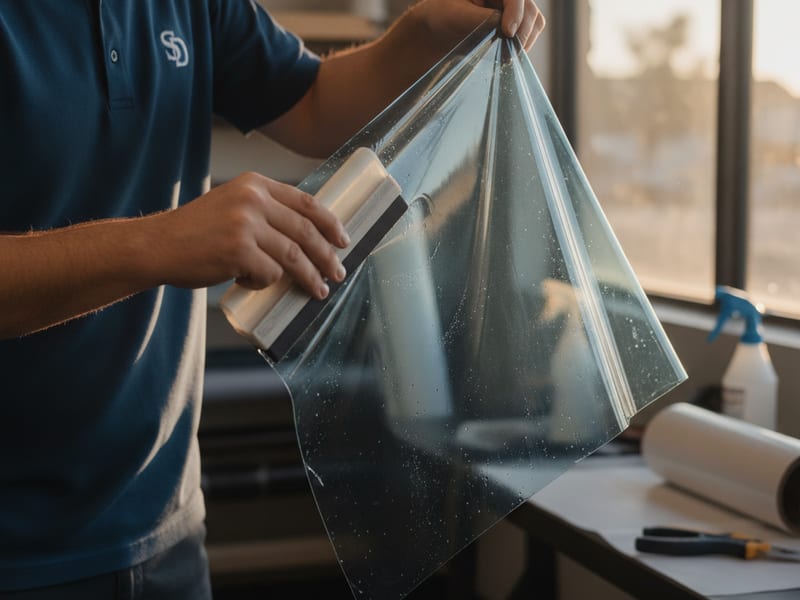
Ceramic and dyed window films look similar on the shelf but perform very differently in San Diego sun. Knowing the difference before you buy saves you from paying for more film than you need or choosing one that fades within a few years.
Choosing heat-rejection film for your home
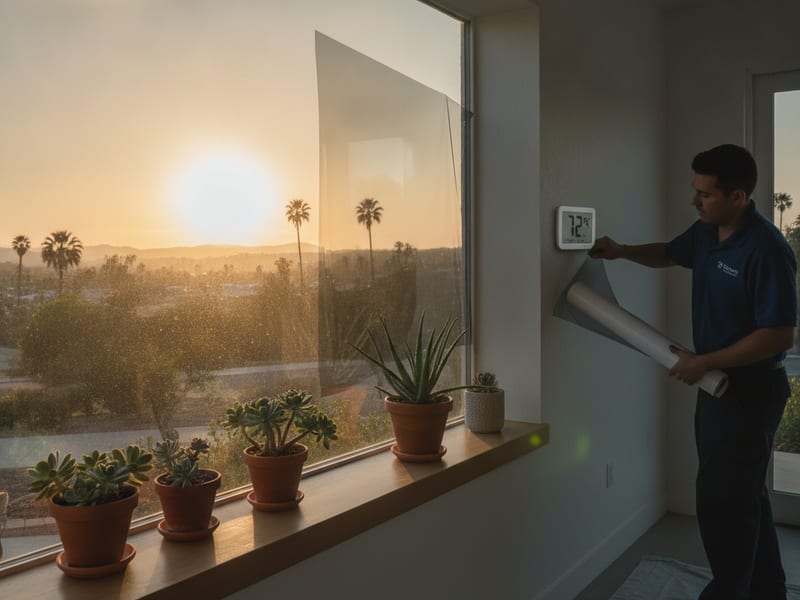
San Diego's sun angle and year-round mild temperatures mean residential heat gain is a real comfort and energy cost problem, not just a summer issue. Picking the right heat-rejection film for your specific window orientation saves money and avoids buyer's remorse.
Security and safety window film
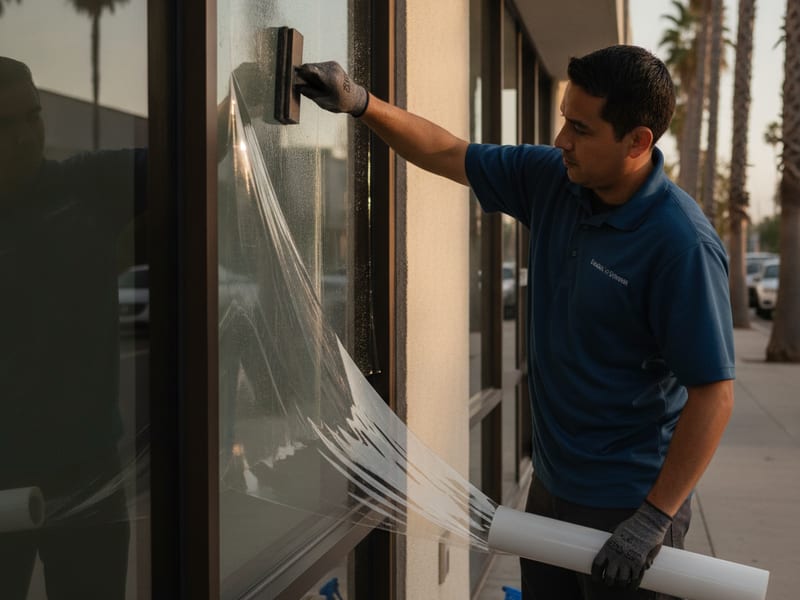
Security window film does not make glass shatterproof, but it does hold broken glass in place, slow forced entry, and reduce injury risk from accidental impacts. Understanding what it actually does helps you decide whether it fits your situation.