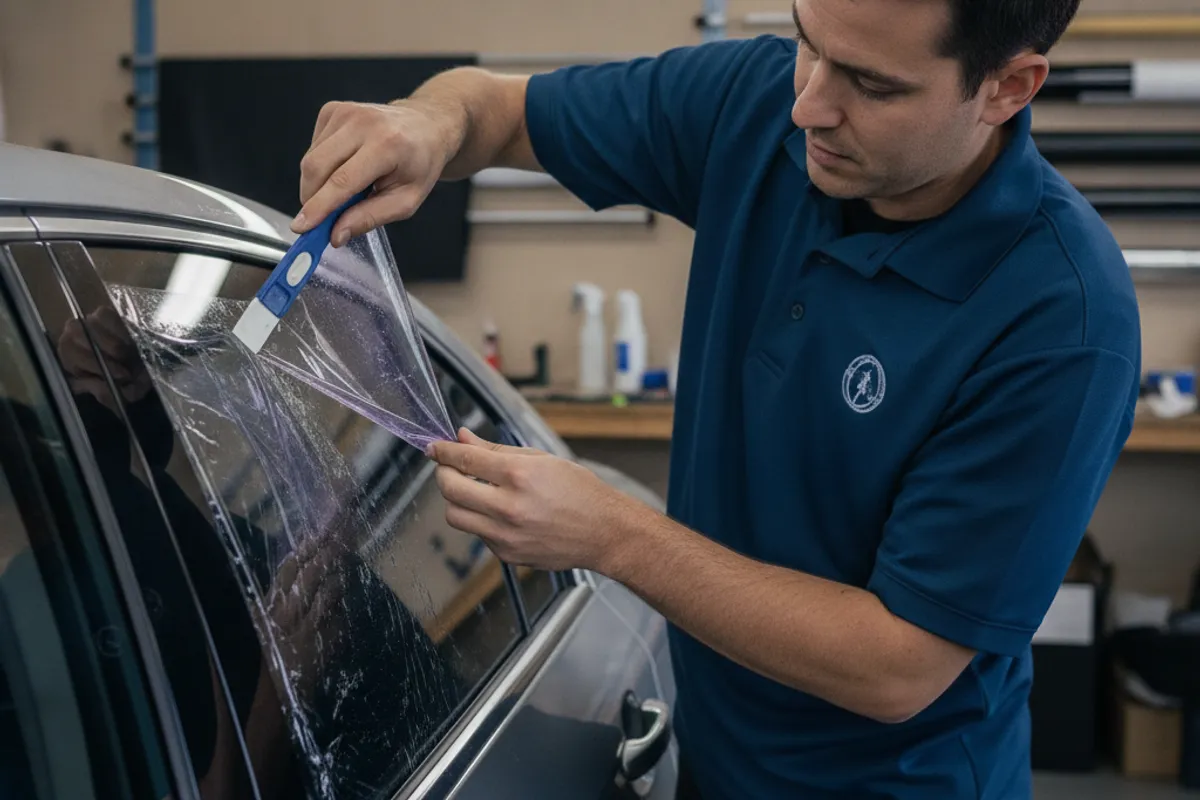
When tint goes bad
Window film doesn’t last forever. The two most visible signs that film has reached the end of its useful life in San Diego are bubbling and purple discoloration.
Bubbling happens when the adhesive between the film and the glass fails. This can be caused by age, low-quality original installation, or film that was applied to glass with contamination. In San Diego’s heat, adhesive failure on south and west-facing windows happens faster than on north-facing glass because the adhesive cycles through more heat expansion every day.
Purple or brown discoloration is a dye degradation issue specific to dyed films. The dye in basic window films breaks down under UV exposure, shifting from neutral gray or bronze to purple or brown. This is most visible in the first 3-7 years on cheaper films and happens faster in San Diego’s UV environment than in less sunny cities.
Both conditions are cosmetic problems and performance problems. A bubbled film is no longer providing meaningful heat rejection because the air pockets disrupt the film’s function. A purple film has lost most of its dye-based heat rejection as the dye degrades.
What removal involves
Old window film removal is a multi-step process:
Step one: The film layer is separated from the glass and removed. The method depends on the film type and how well it’s bonded. Professional installers often use a steamer or heat gun to soften the adhesive before peeling, which makes removal faster and reduces the chance of scratching the glass. Some older residential film peels off in one piece if it’s significantly delaminated. More stubbornly bonded film comes off in pieces.
Step two: Adhesive residue remains on the glass after the film is removed. This adhesive layer has to be dissolved and removed without scratching the glass. Professional tools include adhesive removers, razor scrapers for flat glass, and microfiber or cleaning solutions to finish the surface.
Step three: The glass is cleaned and inspected before any new film is applied. A good installer won’t apply new film over a contaminated or scratched surface.
DIY removal vs. professional removal
Residential window film can be removed DIY with the right approach: a spray bottle with soapy water or ammonia, patience, and a clean razor scraper for flat glass. The risk is glass scratching if you use a worn or contaminated blade, or incomplete adhesive removal that makes new film adhere poorly.
Automotive tint removal is more complicated because of the curved glass and the rear window defroster grid. Using a razor on the rear glass can cut defroster elements, which are conductive traces embedded in the glass surface. Pulling tint off a rear window without first softening the adhesive properly can take the defroster grid with it. Automotive rear window tint removal is a job for a professional with a steamer.
Commercial window film removal, particularly large storefront panels, requires professional equipment because of the glass size and the adhesive quantities involved. A DIY approach on a large commercial panel tends to leave significant adhesive residue that’s difficult to remove uniformly.
What old tint removal costs in San Diego
Residential window removal runs $5-$15 per window depending on the size, how badly the film is adhered, and whether any adhesive residue is particularly stubborn. A full-house removal job might run $100-$250 before new film installation.
Most professional installers in San Diego include tint removal in the quote when they’re replacing existing film. If you’re starting fresh, ask whether removal is separate or included.
Automotive tint removal runs $50-$150 for a full vehicle depending on the number of windows, the condition of the film, and whether the rear window defroster needs special handling.
Getting ready for new film
After old film is removed and the glass is clean, the glass needs to be inspected for any damage. Older window film that’s been on the glass for 15+ years can sometimes leave behind faint etching or hazing where the adhesive has chemically bonded with the glass. This is more common with older domestic glass and with film that was applied using an inadequate adhesive system. In most cases it’s cosmetic and doesn’t affect new film performance.
If you’re replacing old film with new, use it as an opportunity to upgrade. A homeowner who originally had a low-cost dyed film installed in a Scripps Ranch home 10 years ago is a good candidate for a quality ceramic film on the replacement job. The heat rejection and UV protection performance difference is significant, and the new film will last longer.
For more on what replacement film options are available, see the tint removal service page and the residential window tint service page.
The bottom line
Old, bubbled, or purple window tint can be removed and replaced. Residential film removal is reasonably accessible as a DIY project on flat glass, but automotive rear windows and large commercial panels are better handled by a professional with proper tools.
If you have old film that’s reached the end of its life, call (858) 925-5546. We’ll connect you with an insured local installer in San Diego County who handles removal and replacement in one visit.