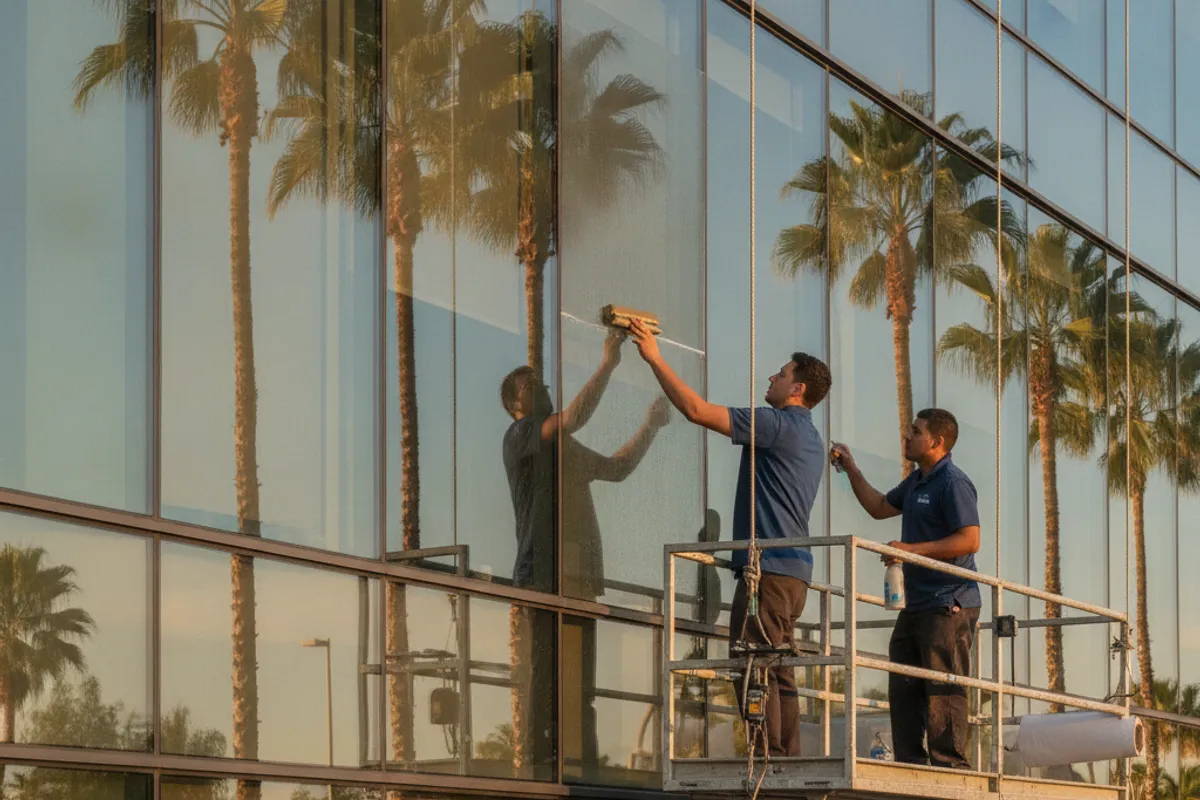
Why San Diego commercial buildings tint their windows
San Diego’s commercial real estate spans glass-heavy office parks in Sorrento Valley and Del Mar Heights, street-level retail in Little Italy and North Park, industrial-adjacent flex spaces in Kearny Mesa, and medical offices throughout the county. The buildings look different, but most of them share two problems: too much solar heat gain in summer and too much glare on screens during working hours.
Window film solves both problems without replacing the glass, which matters when the tenant doesn’t own the building and can’t do a capital renovation.
Energy cost reduction
Commercial buildings in San Diego spend a significant portion of their utility costs on cooling. A south or west-facing office with a lot of glass, which describes a substantial number of commercial spaces in the county, can see cooling costs reduced by 10-20% with a quality heat rejection film.
On SDG&E commercial rates, where peak-period electricity is priced highest during afternoon hours that coincide exactly with peak solar heat gain, the savings compound. Less heat entering through glass during the 1-5 p.m. hours means less AC demand during the most expensive rate period.
For a mid-sized office in Sorrento Valley or Mission Valley with 2,000-4,000 square feet and a lot of south or west glass, the energy cost reduction from commercial window film can represent $2,000-$6,000 per year in SDG&E savings, though actual amounts vary by building geometry, current glass type, and AC system efficiency. That’s a meaningful payback on a typical commercial film investment over 3-5 years.
Glare control for workspaces
Glare on computer monitors, laptop screens, and video conferencing setups is a genuine workplace productivity issue. San Diego’s consistent sunshine means that west-facing offices in the afternoon and east-facing offices in the morning deal with direct or near-direct glare for hours each day.
Anti-glare window film reduces the luminance entering through the glass without fully blocking daylight. The result is a working environment where screens are readable without moving workstations or running blinds all day, which itself blocks natural light and requires more artificial lighting to compensate.
For offices where teams work on creative work, video calls, or close screen work, glare reduction is often the most immediate and appreciated benefit after installation.
Privacy for ground-floor and street-facing spaces
Commercial tenants on ground-floor spaces in San Diego’s denser commercial corridors in Hillcrest, Little Italy, and downtown often want privacy from pedestrian traffic without blocking their own visibility out. One-way reflective film is the most common solution for ground-floor commercial spaces.
Medical offices have stronger privacy requirements. Patient-facing reception areas, examination rooms with windows, and hallways where treatment areas are visible from outside all benefit from privacy film. A frosted or lightly tinted film on street-facing medical office windows keeps the space HIPAA-compliant without requiring frosted glass on renovation.
Glare and HVAC load for retail storefronts
Retail storefronts in San Diego’s commercial corridors face a specific version of the heat gain problem: merchandise and displays near the storefront glass can be damaged by sustained UV exposure, and the space near the windows is often uncomfortably hot in summer for staff and customers.
Commercial window film on storefronts addresses both. It blocks 99% of UV radiation, which protects displayed merchandise from fading. It reduces the heat gain near the storefront, which makes the customer experience in that area more comfortable and reduces the load on the space’s HVAC system.
Smash-and-grab security is also a concern for retail in San Diego’s denser commercial districts. A security film on storefront glass slows forced entry by keeping broken glass bonded in the frame rather than falling away on the first strike.
Leasehold improvements and tenant considerations
Most commercial window film installations in San Diego are tenant-installed rather than landlord-supplied. As leasehold improvements go, window film is one of the less contentious: it doesn’t penetrate walls, doesn’t require permits in most cases, and can typically be removed at lease end if required. Landlords in buildings with newer high-performance glass may have restrictions on film type, particularly for buildings that have specific exterior appearance standards. Review lease terms before installation.
In office buildings where the landlord controls HVAC for the whole floor, tenants who tint their individual suite windows may not capture the energy savings directly (the landlord sees the lower utility bill), but they still get the glare control and interior temperature improvement benefits.
For more on what commercial window film installation involves and what products work for different commercial building types, see the commercial window tint service page.
What commercial tint costs in San Diego
Commercial window film pricing varies by film type, glass area, and access complexity. A standard single-story office suite with 400-600 square feet of glass in a mid-grade heat rejection film typically runs $800-$2,000 installed. Large buildings with thousands of square feet of glass are priced by square footage, typically $3-$8 per square foot installed for quality commercial film.
Multi-story buildings with exterior-access requirements (lift equipment, exterior installation) add to the cost. Most commercial installations on accessible ground and second-floor glass are done from inside.
The bottom line
Commercial window tinting in San Diego delivers three main benefits: lower cooling costs through reduced solar heat gain, better working conditions through glare control, and privacy for street-facing or ground-floor spaces. The payback period on energy savings alone is 3-6 years for most well-exposed commercial buildings, and the workplace comfort improvement is immediate.
Call (858) 925-5546 to get connected with an experienced, insured commercial window tinting installer serving San Diego County businesses.