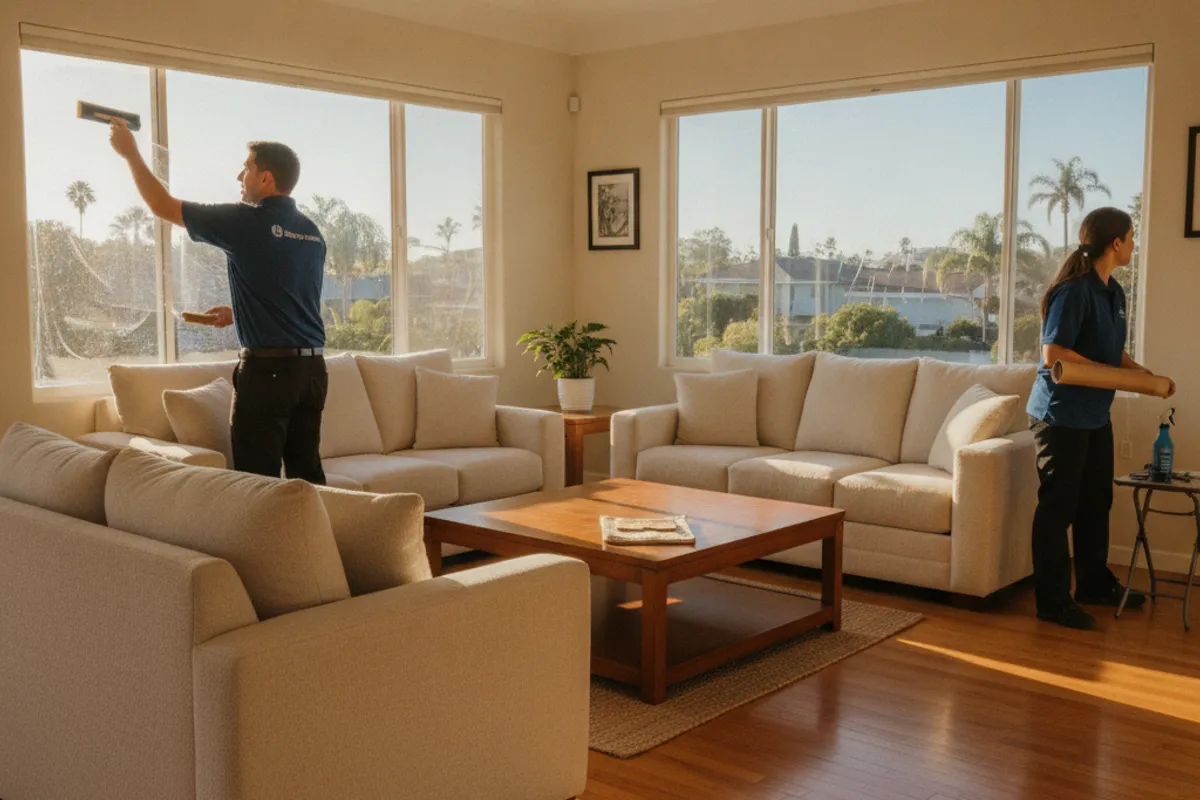
Why San Diego homes fade faster than you’d expect
San Diego’s reputation for mild weather is accurate in terms of temperature. What doesn’t get mentioned is the UV intensity. At 32 degrees north latitude with most of the year at low to zero cloud cover, San Diego receives some of the highest UV radiation of any major US metro outside the desert Southwest.
That UV intensity is why wood floors in La Jolla living rooms fade near window lines within 3-5 years, why leather sofas near south-facing windows in Kearny Mesa get bleached and brittle, and why the dining room rug in a Carlsbad home fades noticeably on the sun side while looking newer on the shadowed side.
UV radiation is the primary driver of sun-related fading in interiors. But it’s not the only driver, which matters for understanding what window film can and can’t protect against.
What actually causes fading
Fading is caused by multiple factors, and UV is the largest but not the only one:
- UV radiation (ultraviolet): Responsible for roughly 40-50% of fading. UV-A and UV-B rays break down dye molecules, bleach wood stains, and degrade fabric fibers.
- Visible light: Responsible for another 25-30% of fading. This is the part of sunlight you can see, and it does damage even in diffuse, cloudy conditions.
- Heat (infrared radiation): Contributes roughly 25% of fading through the thermal energy it deposits in materials, which accelerates chemical breakdown of dyes and finishes.
This breakdown matters because window film that blocks 99% of UV won’t stop all fading. It will significantly reduce the rate of fading, but visible light and heat also contribute. This is why the best protection comes from a film that addresses all three: UV blocking, heat rejection, and visible light control.
How window film blocks UV
Almost all window films, including clear UV-blocking films and standard tinted films, block UV to some degree. The difference is in how much.
Basic residential window film blocks 70-90% of UV radiation. This is an improvement over untreated glass, which blocks some UV but not all, but it’s not enough protection for rooms with valuable furniture or flooring.
Quality UV-protection films block 99-99.9% of UV-A and UV-B radiation. The difference between 90% and 99% UV blocking is meaningful on a 10-year timeline. At 90% blocking, the interior receives 10% of the UV that would come through untreated glass. At 99% blocking, it receives 1%.
Films marketed specifically for UV protection are often optically clear or very lightly tinted, which is important for applications where changing the room’s appearance isn’t the goal. A homeowner with a north-facing gallery wall in a Pacific Beach home that gets some reflected UV can treat those windows with a clear UV film that’s nearly invisible and doesn’t change the room’s light character.
Which items fade fastest in San Diego homes
Wood floors: Oak, walnut, and bamboo flooring all react to UV and visible light, though they don’t all react the same way. Some woods darken with UV exposure; others, particularly lighter woods, bleach. The most common visible sign is a fade line at the edge of a rug or furniture piece, where the protected floor looks noticeably different from the exposed floor within 2-5 years.
Area rugs: Wool and synthetic rugs fade at different rates but both degrade under sustained San Diego UV exposure near south and west windows. High-end Persian rugs are particularly vulnerable.
Upholstered furniture: Linen and cotton upholstery fades faster than synthetic fabrics in most cases. Leather bleaches and becomes brittle with sustained UV exposure.
Artwork and photographs: UV exposure is the primary enemy of printed photographs and paintings on paper or canvas. A quality UV-blocking film can extend the life of framed artwork near windows significantly.
Cabinetry and finished wood trim: Kitchen cabinets near south-facing windows, painted wood trim near patio doors, and wood window seats are all candidates for visible fading within a few years of a San Diego home purchase.
Clear vs. tinted UV films
If UV protection and fade prevention are the primary goals and heat rejection and privacy are secondary, a clear UV-blocking film is often the right choice. It blocks 99% of UV while changing the room’s visible light and appearance minimally.
For rooms where heat rejection is also a priority, a tinted or ceramic film that addresses UV, heat, and visible light together is the better solution. A quality ceramic film blocks 99% UV, 60-80% of infrared heat, and some percentage of visible light depending on the VLT you choose.
For homes where the priority is protecting artwork or flooring in a room that already has great natural light they don’t want to diminish, clear UV film is the product to ask for.
For more on UV film options and how they combine with heat rejection, see the UV protection film service page.
What window film can’t do
Window film doesn’t reverse existing fading. If your floor already has a fade line at the rug edge, the film stops the progression but can’t restore the original color. It also doesn’t protect from interior light sources or from UV that enters through non-treated glass in other rooms. The protection applies to the windows treated.
The bottom line
San Diego’s UV intensity makes interior fade a real problem faster than most homeowners expect. A quality UV-blocking window film that addresses 99% of UV radiation substantially slows the fade of furniture, flooring, rugs, and artwork. For rooms where appearance change is acceptable, a ceramic tinted film handles UV, heat, and visible light together. For rooms where the goal is protection without changing the room’s look, clear UV film is the answer.
Call (858) 925-5546 to get connected with an insured local installer who can assess which film fits your home’s specific situation and what you’re trying to protect.