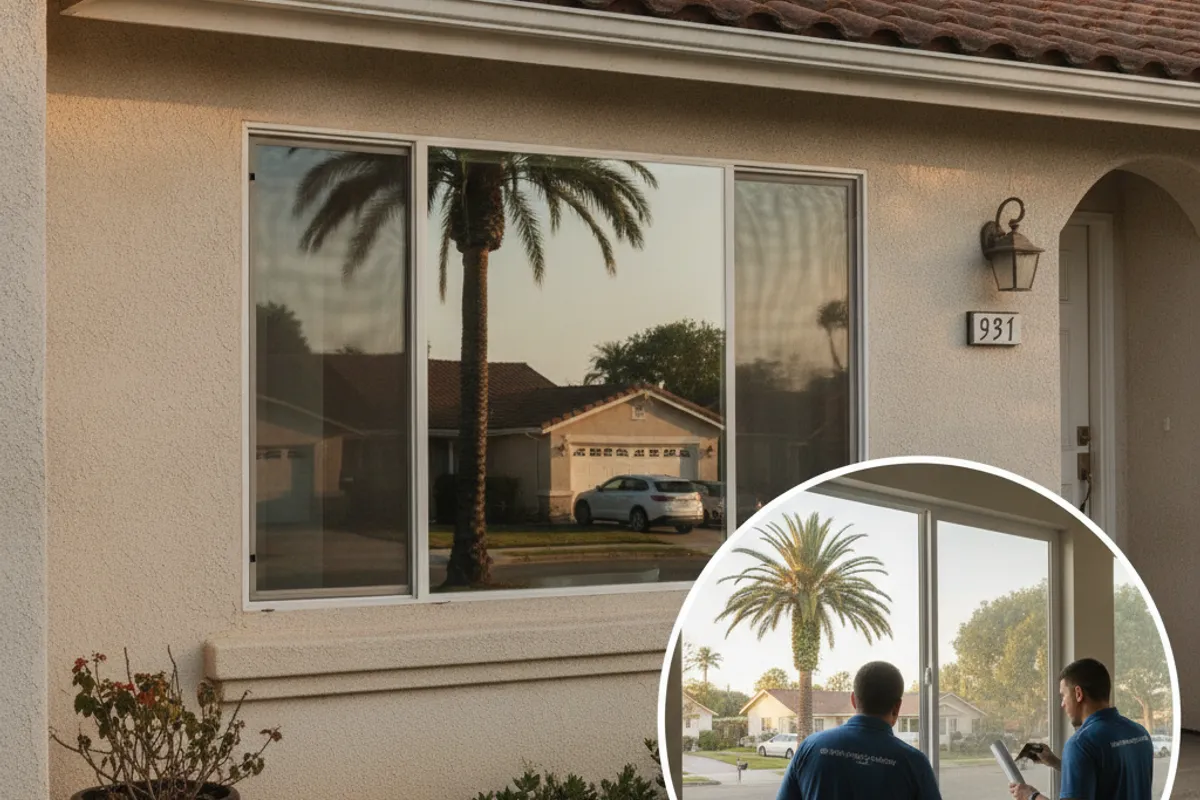
The privacy problem most San Diego homes have
A lot of San Diego homes have the same design tension: large windows and open floor plans bring in natural light and views, but they also make the interior visible from the street, a neighboring property, or a shared outdoor space. Plantation shutters or curtains solve the privacy problem but block light. Privacy window film solves it differently.
The right film depends on which hours you need privacy, whether you’re willing to limit the view from inside, and how you want the glass to look from outside. These factors split the options into meaningfully different categories.
One-way mirror film (daytime privacy film)
One-way mirror film, sometimes called reflective film or daytime privacy film, creates a mirror effect on the outside of the glass while maintaining visible light on the inside. During daylight hours, anyone outside sees a reflective surface rather than your interior. From inside, you can see out normally.
The critical limitation is that this effect reverses at night. When it’s brighter inside than outside (after dark with interior lights on), the mirror effect inverts: people outside can see in and you see less out. One-way film provides daytime privacy but not nighttime privacy.
For San Diego homes with street-facing living rooms or home offices where the main concern is daytime exposure to passersby, delivery drivers, or neighbors, daytime privacy film solves the problem effectively. For homeowners who want privacy in the evenings, it doesn’t.
One-way film also has a reflective appearance from outside that some HOAs in Rancho Bernardo, 4S Ranch, and coastal communities restrict. Check your HOA guidelines before committing to a highly reflective product.
Frosted and etched film
Frosted film creates a translucent effect that diffuses light without blocking it. Glass treated with frosted film looks like sandblasted or acid-etched glass: light comes through, but images are obscured. You can’t see through it clearly in either direction.
Frosted film provides privacy around the clock regardless of light conditions inside or outside. It’s the right choice for bathroom windows, sidelights next to front doors, glass panels in garage doors, and shower enclosures where you want daylight without clear visibility.
The trade-off is that frosted film blocks the view from inside too. If you want to see out while keeping privacy, frosted film isn’t the product. It’s for situations where the glass is for light, not views.
Frosted film is also widely used in commercial settings: office glass partitions, conference room glass walls, and storefront glass panels where a clean, polished appearance is important. For those applications, see the decorative frosted film service page.
Dark tinted film for privacy
Standard tinted window film in darker shades (20% or 35% VLT) reduces visibility into the home without creating the strong mirror effect of reflective film. From inside, you can see out. From outside, your interior is harder to see but not impossible. The privacy effect is real but not complete, and it depends on light conditions.
Dark tinted film works well for bedroom windows and bathrooms where the main concern is casual visibility from a distance rather than close-range inspection. It’s not a privacy solution for a window 10 feet from a public sidewalk where someone walking by has time to look in. But for windows on elevated positions, windows that face a private yard, or bedrooms where the main concern is nighttime visibility from a distance with lights on, dark tinted film is effective.
Dark tinted film also delivers heat rejection and UV protection alongside the privacy benefit, which makes it the dual-purpose choice for west and south-facing rooms in La Mesa, Santee, and Chula Vista.
Blackout film
Blackout film blocks nearly all visible light and completely prevents visibility in either direction. It’s the solution for media rooms, bedroom windows where blackout sleep is the goal, or commercial spaces that need complete visual separation from adjacent spaces.
In residential San Diego applications, blackout film is used primarily for bedroom windows in homes where blackout curtains aren’t practical (windows with unusual shapes, windows in closets, or windows that face east and catch early morning light in rooms where occupants sleep late). It’s also used for garage window inserts where the homeowner wants to prevent visibility into the garage.
What to ask before choosing a privacy film
When do you need privacy? If the answer is daytime only, one-way reflective film is the most view-preserving option. If you need privacy around the clock, frosted film or dark tinted film is more appropriate.
Do you want to keep the view from inside? One-way and dark tinted films preserve the outward view. Frosted and blackout films don’t.
Is your HOA going to be an issue? Highly reflective films draw the most HOA attention in communities with appearance restrictions. Frosted film and lightly tinted film are generally more acceptable. Check your CC&Rs before installation.
Is this a bathroom, sidelight, or decorative application? Frosted film is the most common solution here because permanent privacy in both directions is usually the goal.
For privacy film options and how they fit with heat rejection and UV protection, see the privacy film service page.
The bottom line
Privacy window film in San Diego covers a range from daytime-only reflective film that preserves your outward view, to frosted film that provides all-day obscured privacy at the cost of the view, to dark tinted film that reduces casual visibility while also cutting heat and UV. Blackout film is for complete visual and light separation.
The right product depends on your hours of need, whether you want to keep the view, and your HOA situation. Call (858) 925-5546 to get connected with an insured local installer who can walk through the options for your specific windows and privacy goals.